
About —
About The Unautomated Life
The Unautomated Life is a growing collection of public projects, books, experiments, and conversations about how we want to live alongside increasingly capable technology.
The Unautomated Life is a growing collection of public projects, books, experiments, and conversations about how we want to live alongside increasingly capable technology.
It began in Hercules, California, with a daily walk, a box of free books, and a growing interest in the small things that make a place — and a life — feel inhabited.
Today, the work moves between the physical and digital worlds: a trailside library, writing about place and attention, tools for children learning alongside AI, and new projects built around curiosity, creativity, shared experience, and everyday life.
The projects are intentionally varied.
The thread connecting them is simple: technology is changing what is possible. We want to keep exploring what is worth doing, making, learning, noticing, and sharing as humans.
How it began
The Unautomated Life did not begin as an organization or a manifesto.
It began with walking.
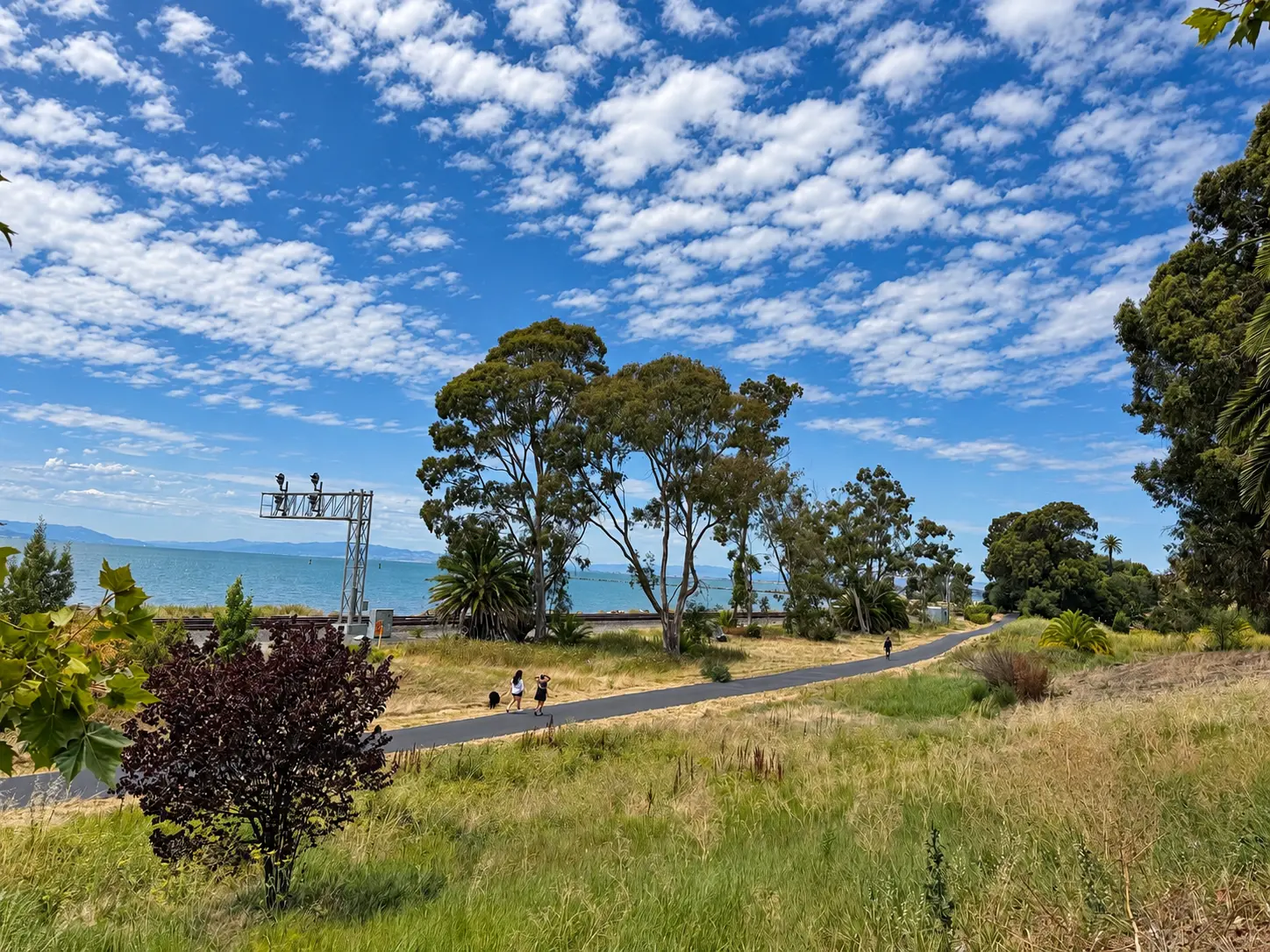
After years spent building companies, running operations, and solving problems, Josephine Hurtado began walking the shoreline near her home in Hercules every day.
The repetition changed the way she saw the place.
A trail became a route she knew by heart. Trees acquired names. The tide became something she checked. Industrial ruins led to questions about the town that had grown around them. Familiar birds became part of the morning. Strangers encountered again and again stopped feeling entirely like strangers.
She began writing about what she was seeing.
Those walks eventually became Powder Ground, a place memoir about Hercules, inheritance, belonging, ambition, grief, and home.
And then one morning, something smaller happened.
On Promenade Street, someone had left a box of books outside for anyone to take. Josephine chose two and kept walking. Later that morning, someone passing on a train waved through the window. She waved back.
They were ordinary exchanges between people who would probably never meet.
The box of books stayed with her.
What if that generosity could become part of the trail itself?
That question became the Hercules Bay Trail Library.
The Unautomated Life began taking shape around experiences like these: small ideas, rooted in real places, that give people another reason to read, wander, wonder, make something, notice something, or connect with someone else.
What we make
The Unautomated Life works through projects rather than a single program.
The Hercules Bay Trail Library brings books into the landscape where the idea began: a small public exchange built around reading, walking, generosity, and discovery.
Own Thinking explores how children can grow up with AI while continuing to develop curiosity, reasoning, judgment, and confidence in their own minds.
Books and essays explore place, technology, creativity, attention, and everyday human experience through lived stories rather than abstract prescriptions.
Other projects will grow from the same practice: notice something worth caring about, stay curious long enough to understand it, and see what can be made from there.
Some may live online. Others may exist on a trail, in a school, around a table, or inside a book.
The form follows the idea.
Why Hercules
The Unautomated Life could have started almost anywhere.
It happened to start here.
Hercules sits on the edge of San Pablo Bay, on land once occupied by one of the largest explosives works in the country. Freight tracks still follow the shoreline. Marshes run beside new housing. Eucalyptus planted for an industrial purpose now shade walking trails. A new downtown rises near remnants of the old company town.
It is a place continually becoming something else while carrying what came before.
Walking it every day makes change visible.
A building appears where there was an empty lot. Wildflowers take over disturbed ground. The tide erases and redraws the shoreline. A familiar bird disappears for a season and returns. A stranger becomes someone you recognize.
Hercules became the first laboratory for The Unautomated Life simply because it was the place close enough to know slowly.
We think every place contains that possibility.
How we work
Our projects usually begin with attention rather than scale.
We like things that are human-sized enough to experience directly. A library somebody can encounter on a walk. A question a child can wrestle with. A book rooted deeply enough in one place that it might help someone see their own place differently.
We use technology extensively, including AI. It helps us research, organize, build, test, and extend what a small group of people can do.
We also spend time in the physical world the work is about.
We walk the trail. We talk to people. We read the book. We make the thing. We change our minds. We learn what the first idea missed.
That combination — capable tools and lived experience — shapes the work.
About Josephine Hurtado
I’m a writer, entrepreneur, and builder based in Hercules, California.
I’ve spent much of my career creating companies, systems, and technology-enabled businesses. That work has placed me unusually close to the rapid expansion of AI—and to the questions that arise as machines become capable of doing more of the things people once did themselves.
Outside work, I walk.
My daily shoreline walks became Powder Ground, a place memoir, and eventually provided the ground from which The Unautomated Life grew.
I write about place, migration, ambition, grief, womanhood, belonging, and ordinary life observed closely.
I’m also COO of UNIK Media Group, co-founder of JAC Labs, a mother of four, and I live in Hercules with my husband, Jack.